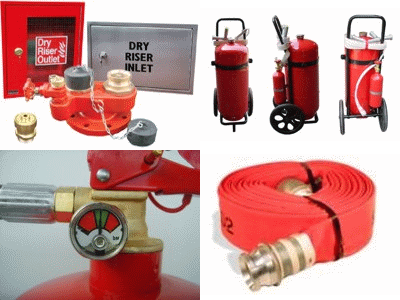
London & Home Counties leading specialist in Dry Riser Maintenance
Method Statement for Dry Riser Testing
-
Inspect all
pipe work, joints and valves to ensure they are in good condition and
have not been damaged.
-
Open and
close each landing valve, lubricating if necessary, and inspect
internally for blockages. Fit new instantaneous washers where any appear
to be perished.
-
Locate air
release valve and check on its condition. Replace if ball appears to be
perished.
-
Inspect
inlet breeching and drain valve, lubricating if necessary.
-
Insert
pressure gauge into the instantaneous coupling on the top landing valve.
-
Connect
drain hose to drain valve.
-
Connect
water feed to the inlet breeching non-return valve.
-
Fill the
riser with water, whilst ensuring all air is released from the air
valve.
-
When the
riser is full check each landing valve and all pipe work for any leaks.
-
If no leaks
detected, pressure should be increased to 10 bar at the inlet breeching.
A note should be made of the pressure reading at the top of the landing
valve.
-
The riser
should now be left under pressure for a period of 15 minutes.
-
If the
pressure reading at the top landing valve has not reduced by more than 2
bar, the riser may be certified as passing the test.
-
The riser
should now be drained by opening the drain valve at the lowest point of
the riser.
-
Once the
riser is totally drained the valve should be shut tightly.
-
If the
landing valves are not in locked cabinets then they must be secured in a
closed position using a leather strap and padlock.
-
A
maintenance label must be fitted in the inlet cabinet stating the month
and the year of the test, the result of the test and the engineers who
carried out the test.